
On October 20, the Russian daily newspaper Kommersant run a piece titled "Oh, Mine Gas”. Journalists discovered that the Ministry of Industry and Trade, Ministry of Finance and the Central Bank are reviewing the proposal from domestic oil companies to mine cryptocurrencies right at their oil fields. The idea is to use associated petroleum gas (APG) to power on-site generators that produce free electricity for cryptocurrency mining operations.
APG is the natural gas that comes up together with crude oil during extraction from oil wells. Instead of being captured and utilized, much of it is often burned off as flared gas at the well site.
Natural gas and APG are chemically similar, but they are treated differently by the energy industry. While natural gas is a commodity transported via pipelines to be sold on the markets, flated gas is a waste by-product that occurs when the oil site lacks infrastructure.
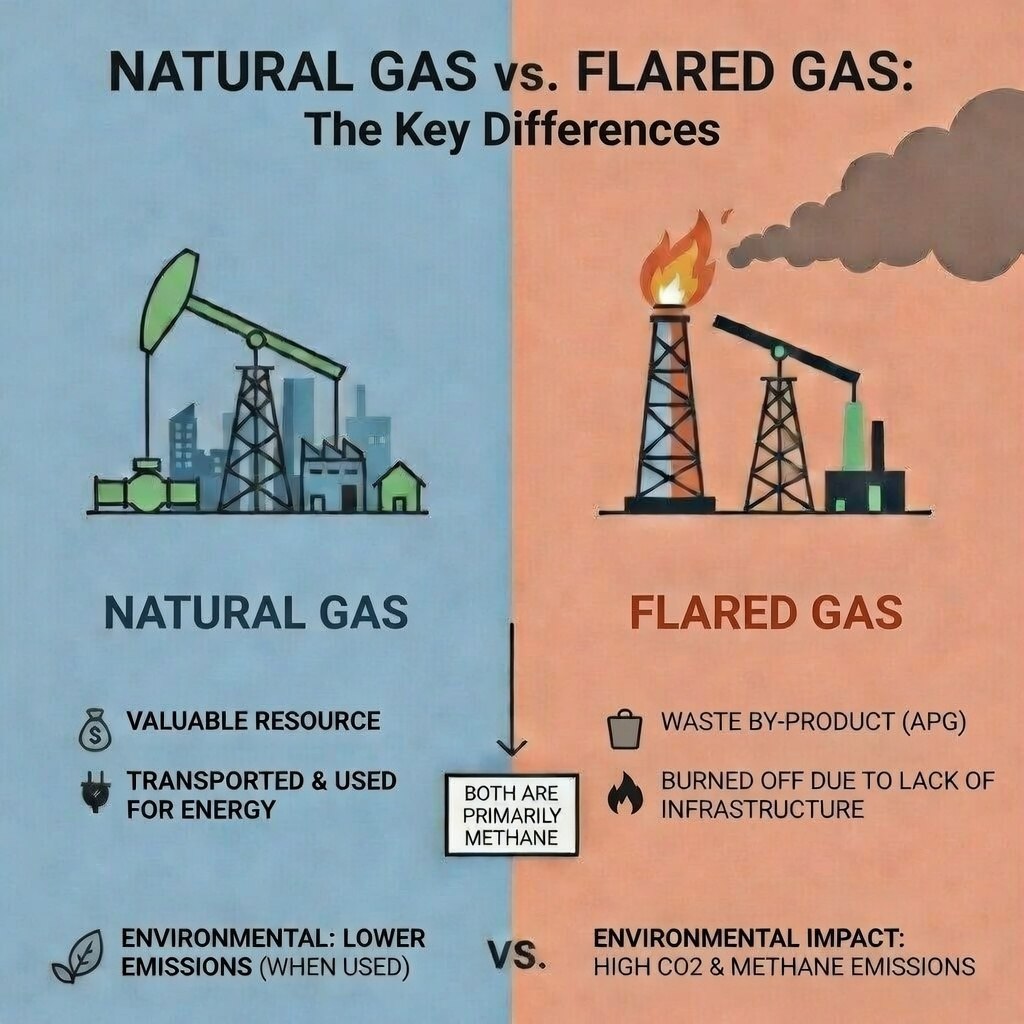
For decades, APG was one of the symbols of oil production, burned in flares and blazed around the clock as a glaring sign of wasted resources. Now, though, that same gas might serve a purpose of generating electricity for cryptocurrency mining.
Back on September 20, Deputy Minister of Industry and Trade Vasily Shpak sent an official inquiry regarding this matter. However, the government has yet to issue a ruling on whether it’s legal to deploy data centers at these sites.
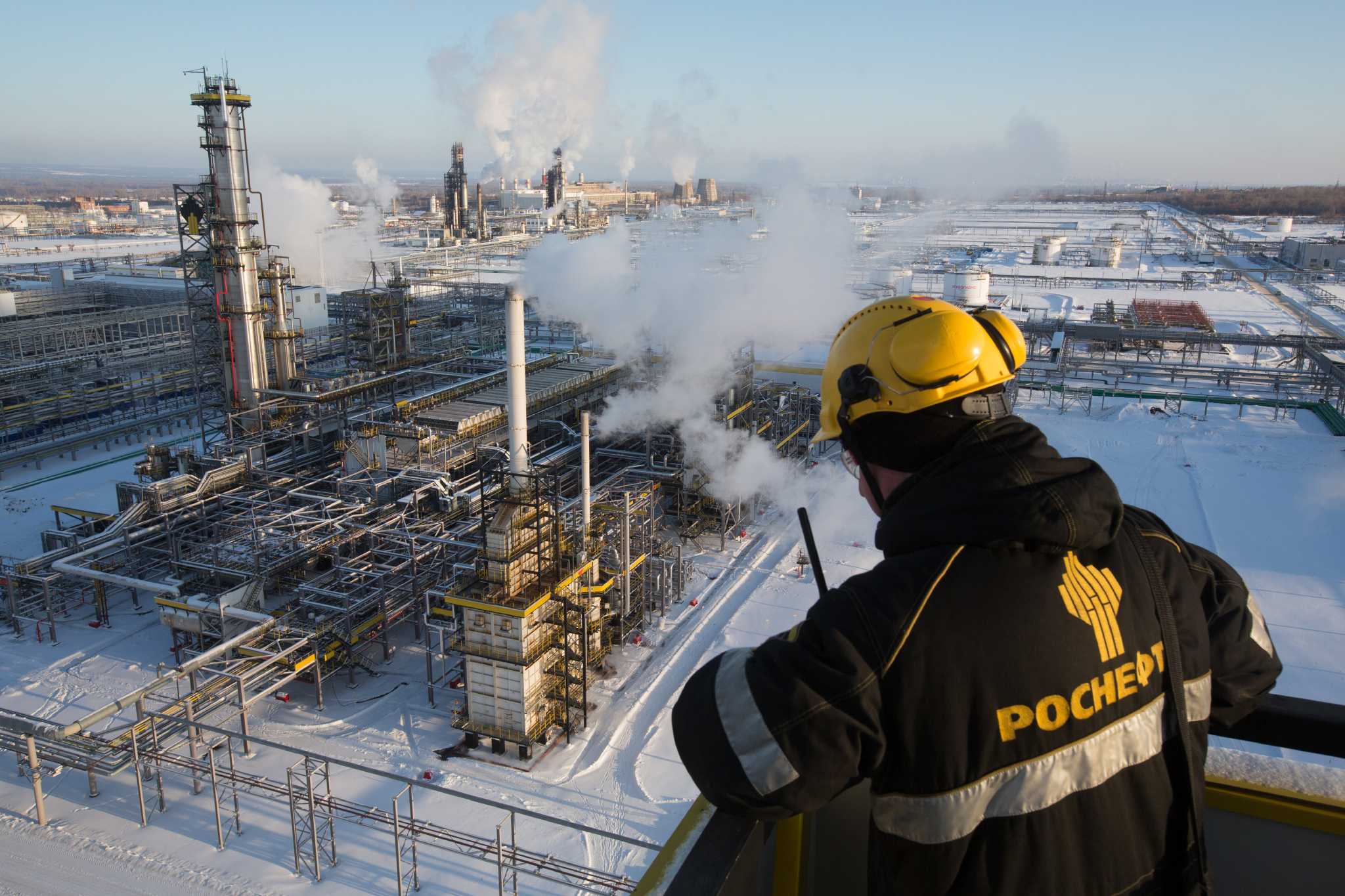
Bitcoin mining on natural gas is the process where APG is captured and converted into electricity to power the on-site cryptocurrency mining rigs and data centers.
Instead of being wasted away as flared gas, it is directed into gas-powered turbines or piston generators to create a local electrical grid that feeds a mining operation. By using the stranded natural gas for Bitcoin mining, oil companies seek to turn a once neglected by-product into a valuable digital asset and provide sustainable energy for this blockchain network.
The process of turning an environmental liability into a financial asset is straightforward. Here is how it typically works:
As oil is drilled, raw natural gas surfaces. Instead of entering a flare stack, it is captured and routed through a filtration system.
The gas is fed into mobile generators located near the wellpad. These engines combust the gas to produce electricity.
The generated power is wired directly to mobile data centers (often shipping containers) where Bitcoin mining ASICs are located.
The mining rigs begin monetizing the energy immediately without needing a traditional grid connection.
Such gas-powered crypto mining creates a closed-loop system where energy isn’t wasted but turned into revenue that also contributes to a sustainable oil field operation.
The initiative of Russian oil tycoons seems incidental only at first glance. In fact, it hides quite a pragmatic approach to the side business, which is the production of cryptocurrencies, and the desire to reduce fines for exceeding environmental standards. First of all, this applies to associated petroleum gas and the possibility of obtaining electricity from it.
However, since 2012 the Russian Federation introduced a regulation that allows no more than 5% of produced APG to be flared. Otherwise oil companies are fined. In 2018 alone, these fines reached 405.6 million rubles. Producers now try to deliver it to gas refineries or feed it into pipelines, pump it back into the reservoir to enhance oil recovery and, most importantly, use it in gas turbines, gas piston and microturbine units. These generators can produce free electric power from what should have been wasted away as a stranded gas.
In addition, there are talks of increasing useful utilization of APG to 97.5%. These measures force Rosneft, Gazprom, Lukoil, and dozens of other companies urgently look for ways to use the "extra" gas they produce. For example, by generating electricity from it for some purpose. Obviously, gas-powered cryptocurrency mining is one of the best ideas for using associated gas.
The oil and gas Bitcoin mining provides several major benefits, namely:
Access to virtually free surplus electricity;
Avoidance of environmental fines;
Foreign investment attraction;
Environmental bonus;
Possibility for heat recycling.
Let’s review each one of them in detail.
One of the foundations of the FPGA mining profitability is the cost of electricity. Ideally, electricity should be surplus and free. The Russian Federation has enough sources of cheap and surplus electricity, this includes almost 200 hydroelectric power plants, including small ones, and 11 nuclear power plants, and a dozen wind farms. The use of APG is another source of power generation, which makes it possible to engage in a fairly profitable business. At the same time, oil companies have access to free electricity for the implementation of any digital currency projects.
Accordingly, there is an opportunity both to make money on cryptocurrency and to attract investors willing to deploy mining facilities. This is especially true for Chinese miners, who were forced to leave their homes under pressure from the authorities. However, restrictions on mining periodically erupt in Iran, Abkhazia, Kyrgyzstan, Kazakhstan and many other regions. It is Russia that can become a safe haven for miners from all over the world. And with immersion cooling, mining cryptocurrency can be much more profitable, as the overclocking of equipment reaches 40-60% over the standard performance, as BiXBiT offers.
Gas piston power plants can produce electricity also from associated petroleum gas
The third important effect of associated gas recuperation is the improvement of the environmental situation in the region. Russia has traditionally been one of the leading countries in flaring APG. In fact, associated gas also contains hydrogen sulfide, carbon dioxide, and other harmful substances. Soot, products of incomplete combustion of hydrocarbons, sulfur dioxide, nitrogen oxides, etc. enter the atmosphere. They spread for many kilometers and have a negative impact on people, fauna, and flora. The mining industry can get rid of flares over oil fields forever.
If miners switch to immersion cooling for their mining equipment, such as offered by BiXBiT, they could create a closed-loop infrastructure. Namely, they will be able to redirect the heat generated by the mining equipment for water heating and central heating. This will provide heat for both production facilities and nearby residences. It can also be used to develop commercial projects such as greenhouses, aquaponics, fish ponds, terrariums, wood drying, painting, alcoholic beverage production, etc.
Finally, it will allow the production of self-owned power plants, including for later export.
The Kommersant publication cites some critical assessments of experts who question the effectiveness of "oil and gas Bitcoin mining". It also points out, for example, that the companies' letter to the regulators was written for a reason, since the attitude to mining in Russia is not clear, and cryptocurrencies are not detailed in any laws, except the law "On Digital Financial Assets". Accordingly, the initiative of oil companies is already at risk at the first stage because of the legislative field, devoid of legal regulation.
There is a lack of regulation with regard to mining in Russia, but why do experts consider this an obstacle? Firstly, the necessary laws and changes can be adopted after the government assesses the effectiveness and usefulness of this type of activity. Secondly, the regulators have repeatedly stressed their willingness to organize "sandboxes," that is, zones with special jurisdiction, similar to FEZs (free economic zones). On an individual and experimental basis, it is quite possible to allow a couple or three companies to place gas-powered crypto mining data centers near oil fields.
Things get more complicated when it comes to taxation and recognition of cryptocurrencies. However, deputy Aksakov hinted in mid-October that the necessary regulations may be introduced to the Tax Code in the near future. That is, cryptocurrency will finally be recognized as a taxable type of property. This may not be good news for those who like to make super-profits, but at least there will be legal certainty.
Another expert pointed to the fact that oil companies are engaged in production of hydrocarbons, and the construction and maintenance of data centers for them will be very expensive. Here it should be noted that for people working in a much more complex and responsible industry, the construction of a data center can hardly be called an impossible task. Natural gas bitcoin mining offers distinct technical advantages, especially when using the aforementioned BiXBiT solution:
Eliminates dust contamination and noise generation since the equipment is always kept in a thermally stable liquid environment;
No need for costly ventilation, air purification and conditioning systems
No need for frequent maintenance of mining equipment or replacement of consumables;
The number of employees and system administrators required and their qualifications are significantly reduced;
BiXBiT can independently carry out design works based on the customer's wishes and provide the necessary consulting services.
Finally, the last concern is caused by the fact that the participation of, say, Chinese miners exposes them to the risk of criminal prosecution. The Chinese who lease the facilities are not residents of the Russian Federation and are required to report their income to the PRC, but mining in China is prohibited. Well, there are options here too, ranging from not entirely legal to completely severing ties with China, renouncing citizenship (this is allowed if one permanently resides abroad), or creating resident companies.
The idea of mining bitcoins near oil fields is not a Russian know-how. For example, Kirkwood Oil and Gas LLC in Wyoming (USA) has already attracted bitcoin miners precisely because of the need to reduce emissions and minimize global warming. In addition, oil producers have long been concerned about stranded gas being burned and not generating any profits.
A similar partnership has been seen in North Dakota, the largest oil-producing state in the United States. There, Equinor ASA (Norway) and Enerplus Corp (Canada) also diverted APG to generate electricity for mining. And Denver-based Crusoe Energy Systems Inc. used 40 containers in shale basins. Their supplier was Kraken Oil & Gas Partners LLC, which produces about 10,000 barrels of oil a day, making it the largest oil producer in Montana.
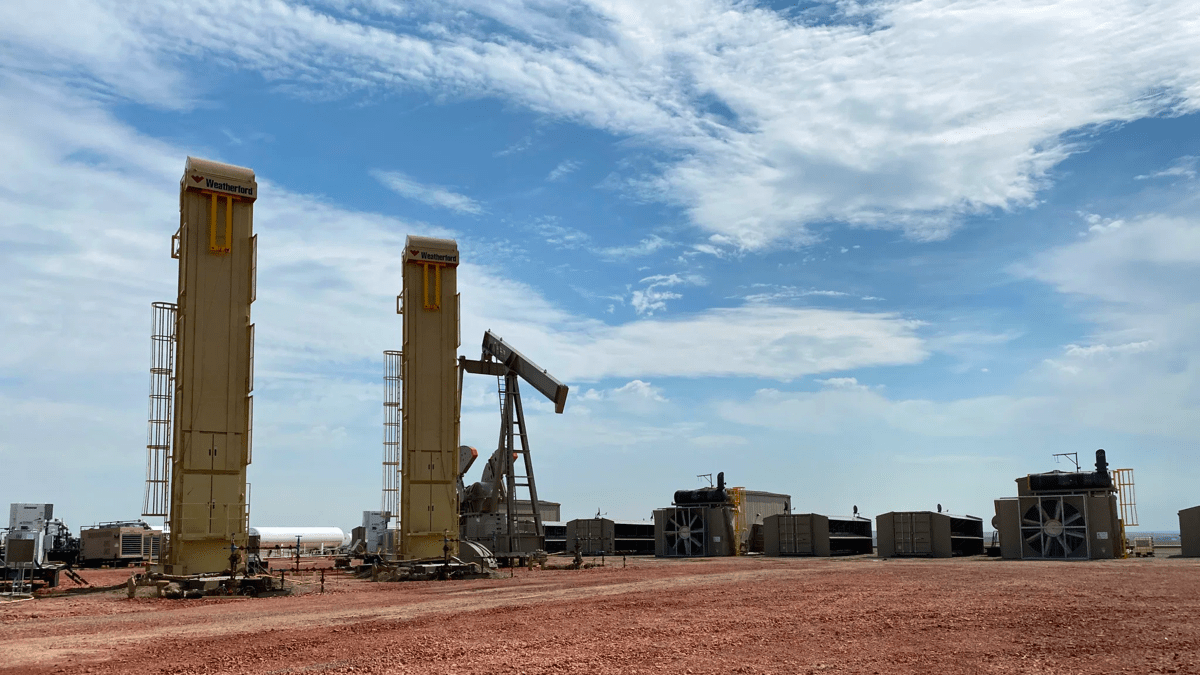
June 2021, Sydney, Montana. There are hangars with mining equipment on the right side of the oil wells
On September 4, 2021, 200 oil company executives and bitcoin miners met secretly in Houston, Texas, USA. There they discussed the possibility of using associated petroleum gas to jointly make money for oil companies and miners, as well as to reduce harmful emissions. In addition to Texans, people from California, Colorado, Louisiana, Pennsylvania, as well as Australia and Great Britain attended the meeting.
One meeting attendee, A. Ortholph, who heads Upstream Data's U.S. business development business, said he was ridiculed in 2018 as soon as he talked about flared gas Bitcoin mining. Three years later, it was clear that this was the best opportunity the oil and gas industry could have had. One can only hope that Russian companies will not have to wait so long. After all, it is quite obvious that, despite the opposition of government officials, it is APG mining that can make the oil and gas industry even more profitable and environmentally sustainable.
Thus, mining using associated petroleum gas is a very promising direction for both oil producers and cryptocurrency miners themselves. This solution reduces the greenhouse effect, improves the environment and at the same time provides free electricity for earning digital currency. The use of BiXBiT immersion cooling makes it possible to additionally increase the computing power of the devices, redirect the generated heat to other needs, and avoid unnecessary efforts to service and maintain the performance of the mining equipment.


